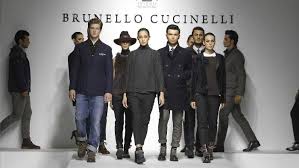
“It’s not about me as a brand, it’s about humanity”
Knowing how they did it, how Brunello Cucinelli became one of the most successful luxury brands in the world begins with understanding how to carve out a truly unique and sustainable advantage. In their case, “it’s about humanity”.
Rising to become the leading cashmere maker on the market and one of the most desired luxury clothing brands, Brunello Cucinelli started in 1979 with little more than a bank loan, a friend, and a conviction. Influenced by his father’s demoralizing experience as a factory worker, Brunello was inspired to “find a new approach to work that endorses a man’s ethics, dignity and moral values”. A self-taught philosopher, he created an inimitable strategic advantage for his company, not from marketing, technology or operations, but from creating a “human” advantage.
The facts speak for themselves. From a single store in Porto Cervo, a resort town on the island of Sardinia, the company has grown to more than 100 stores and over 130 monobrand points of sale around the world. In a challenging market, the company has continued to achieve outstanding performance through a differentiated philosophy rooted in human values.
The Human Advantage
Brunello Cucinelli declares, “it’s not about me as a brand, it’s about humanity”. Brunello places paramount importance on the essence of humanity, stating: “Quality of life is essential. Work becomes more humane if man is placed at its center.” To deliver on this, he went beyond favourable human resource policies and practices and invested in this philosophy in a major way by buying and restoring an entire town to provide his employees with an aspiring and inspiring lifestyle. He created a strategic competitive advantage through nurturing a human experience.
In the late 1980s he bought the medieval hamlet of Solomeo and restored the town into an artisan factory village where employees live and work, including Brunello himself. The town includes a thirteenth-century castle, church, medieval houses, farmhouse and villa. Old buildings have been transformed into artisan workshops, warehouses, dining areas, town squares and an outdoor theatre, each with a plaque containing a philosophical maxim.
Being Human with the Employee
Brunello built what he calls a “humanistic factory” where “employees are treated as preciously as the clothes they create”. With an emphasis on craftsmanship, creativity, pride in one’s work and perfection, there is no traditional hierarchy and no distinction between management and non-management. Employees earn higher than average wages, do not punch time cards and each employee has a key to the workplace.
He really means it when he contends that it is imperative to have a mutual respect for one’s peers: “I meet with all of the employees often to talk about how the company is doing, the profits, my ideas, the stores we are opening. I share everything with them.”
He also really means it when he says, “quality of life is essential”. Employees enjoy cultural and social activities including lectures on art, philosophy, architecture and concerts performed in the concert hall he has built for them. Reciting, “Alexander the Great drank the same water as his soldiers and Julius Caesar slept in the same bed as his”, Brunello sits alongside his employees to enjoy a 90-minute three-course lunch each day, with wine, for the company-subsidized price of 2.80 euros. The food is prepared from Brunello Cucinelli’s own gardens and olive groves where he grows produce exclusively for the consumption and enjoyment of the employees and not sold to the public.
Being Human with the Customer
Brunello follows an idiosyncratic business philosophy that includes various influences from Renaissance humanism, Senecan stoicism, Benedictine rigour and the theories of Theodore Levitt, who argued that the purpose of companies is to keep and serve customers. Brunello’s philosophy governs the way he does business, noting: “I would like to make a profit using ethics, dignity and morals”. He does not want to make anything that you throw out. He proclaims, “Selling luxury goods is also about selling a way of life”.
For Brunello, being human goes beyond the artisanship and lifestyle of luxury to include customer accountability and service. He states, “The fundamental principle is that the client comes before profit.” Considering minimum orders insulting to clients, he has no minimum orders. Religious about on-time delivery, he will ship a reorder of even a single sweater overnight at no extra cost. Brunello’s perspective is: “It is more palatable for a client to know that he can buy only 20 sweaters. He is more inclined to dare.”
Being Human with the Community
In his autobiography he writes, “On the one hand the riches of plunder, those of the man who steals and hoards: on the other hand the good riches of the man who transforms and distributes, and by so doing, renews life. This is what Solomeo represents for me.”
With this maxim in mind, Brunello says, “it’s important to take a profit… also the profit must go to the workers to give their work dignity and lastly, profit must go towards the local community whether that be a hospital, theatre or monastery”. As with every philosophy Brunello espouses, he demonstrates his commitment through real and significant investment. Twenty per cent of the company’s annual profits are set aside for restoring the village of Solomeo to create an environment where his employees are “offered something more” where they work and live.
To expand and develop his humanist objectives and ideas, he recently established the Brunello Cucinelli Foundation. The foundation aims to have a direct influence on human values, understood as being the relationship between people and various activities in society. One example is the academy and library he has built where classes are offered to young people wishing to learn artisan trades. The goal of the academy is to honour the merit of people and promote projects that raise awareness of human values. There are four schools including art, religion, enterprise and science.
So What Is Your Advantage?
As organizations pursue growth, scale and transformation, one of the most important leadership questions becomes: What is the defining strategic advantage that truly differentiates us and creates long-term value?
At enabling ideas®, this is one of the core questions explored through our Strategic Blueprint™ process — a structured strategic design engagement that helps organizations align leadership around a clear future direction, uncover differentiating strategic advantages, and define the integrated priorities required to achieve sustainable growth and performance.
A Strategic Blueprint™ goes beyond traditional strategic planning. It is designed to create organizational clarity around:
- Purpose and positioning
- Strategic differentiation
- Growth opportunities
- Business model effectiveness
- Leadership alignment
- Operating priorities
- Execution readiness
One of the frameworks often explored in strategic design is the concept of sustainable competitive advantage, including the principles behind the VRIO model developed by Jay B. Barney in Gaining and Sustaining Competitive Advantage. According to the VRIO framework, sustainable advantage is created when something an organization does is:
- Valuable
- Rare
- Difficult to imitate
- Organized effectively for delivery
Many of the attributes companies traditionally compete on — product features, pricing, technology or even talent — are increasingly replicable. Brunello Cucinelli’s humanist philosophy is a compelling example of a deeper and more enduring strategic advantage. Product quality can be copied. Technology can be acquired. Comparable talent can be recruited. What is far more difficult to replicate is a deeply embedded philosophy that shapes culture, customer experience, employee engagement and community impact in an authentic and integrated way.
As Brunello says, “When it is true luxury, you feel like they have it in their soul and heart.”
By Blair Severn and Marlene Bonigut of enabling ideas®. Research by Heather Wilson of Information Solutions, Rotman School of Management, University of Toronto.
Further reading:
1 Gaining and Sustaining Competitive Advantage, Reading, Mass, by Barney Jay B, Addison-Wesley Pub. Co. (1997).
2 http://www.brunellocucinelli.it/#/en/home, by Cucinelli Brunello
3 Fashion’s Mr. nice guy, by Ilari Alessandra, Women’s Wear Daily (January 19, 1997)
4 One Hundred and One Beautiful Towns in Italy, by Lazzarin Paolo, New York: Rizzoli (2004)